
EAB’s Green blade line serves light contractors and DIYers who want professional-quality cuts without professional-grade pricing. The standout feature? An exchange program that gives you credit for returning worn blades — the first real attempt at circular saw blade recycling that actually saves contractors money.

The Green Exchange Advantage
EAB’s Green Exchange system lets you return blades for credit, with up to 48% credit on returns according to web sources. Think about that for contractors managing multiple job sites across Montana. Instead of tossing dead blades in the scrap bin, you’re banking credit toward replacements. For volume users churning through blades on laminate installs or production framing, those credits add up fast.
The environmental angle goes deeper than marketing fluff. These blades use C2 micro-grain carbide made from recycled tungsten and feature chromium-free construction. The entire blade construction is fully recyclable. That matters when you’re dumping construction waste at transfer stations that charge by weight and material type.
Performance Reality Check
Let’s be clear about what you’re buying. Green blades use C2 carbide and are rated “General” grade for light-to-medium duty DIY use, while Blue and Orange lines feature C3 or higher carbide with thicker plates for professional heavy-duty applications. The Green line won’t outlast premium carbide in production environments. But for finish carpenters doing occasional laminate work or contractors who need decent blades for apprentices, the exchange credit changes the value equation.
| Specification | 7-1/4” x 40T Model |
|---|---|
| Diameter | 7-1/4” (184 mm) |
| Tooth Count | 40 |
| Arbor Size | 5/8” DKO (13.0 mm) |
| Kerf | 1.8 mm |
| Hook Angle | 15° |
| Max RPM | 8000 |
| Tooth Geometry | ATB (Alternate Top Bevel) |
| Plate Material | HRC-45 hardened steel |
The 15° hook angle delivers controlled cuts — less aggressive than framing blades but grabbier than negative-hook melamine specialists. Expansion slots reduce vibration and allow for heat expansion, which matters when you’re pushing through stack cuts of particle board.
Recommended materials include plywood, particle board, solid lumber (softwood and hardwood), MDF, melamine, and laminates. Common use cases span finishing cuts, fine cross-cutting, ripping, general purpose woodwork, trim fabrication, cabinetry, and DIY projects. Wide application range for a general-purpose blade.

Who Should Buy Green
Worth it for contractors who burn through blades on melamine and laminate work where the material destroys carbide anyway. The exchange credit effectively subsidizes blade replacement cycles. Also makes sense for shops equipping apprentices or running multiple saws where blade theft is a reality.
Skip it if you’re cutting engineered beams, fiber cement, or anything else that demands C3 or better carbide. The Green line prioritizes eco-friendliness, recyclability, and value pricing through the exchange credit program — not maximum durability. For production framing or demolition work, step up to EAB’s professional-grade lines.
Compatible with standard 7-1/4” circular saws from brands such as DeWalt, Makita, Bosch, and Milwaukee that use a 5/8” DKO arbor. No compatibility issues with mainstream contractor saws.

Frequently Asked Questions
Q: How much credit do I get for returning worn Green blades?
Web sources indicate up to 48% credit on returns through the Green Exchange program. Contact your supplier for current exchange rates and participating locations.
Q: Can Green blades handle pressure-treated lumber?
Yes — solid lumber (softwood and hardwood) is listed among recommended materials. The C2 carbide handles standard framing lumber fine. Just don’t expect the blade life you’d get from premium carbide.
Q: What’s the actual difference between Green and Blue/Orange lines?
Green blades use C2 carbide and target light-to-medium duty DIY use, while Blue and Orange lines feature C3 or higher carbide with thicker plates for professional heavy-duty applications. You’re trading durability for the exchange credit benefit.
Q: Will these work in my cordless saw?
Yes — the 8000 max RPM rating covers all mainstream cordless circular saws. Web sources mention the ultra-thin kerf reduces saw workload and extends battery life in cordless tools.
Ready to Get Started?
Our tools specialists can help you find the right EAB products for your project.
More from EAB


Explore All EAB Products
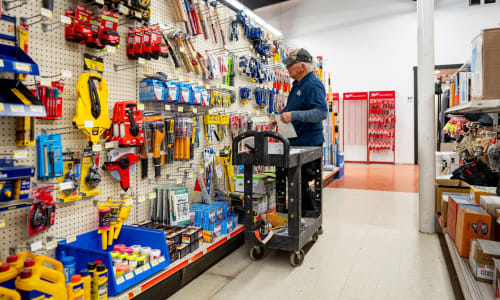
We carry EAB across all 11 Montana and Idaho stores.
