

TruExterior’s 70% recycled poly-ash material solves the moisture trap problem that plagues fiber cement and engineered wood siding in Montana. Containing no wood fiber, it prevents swelling, cracking, splitting, and cupping — the exact failures contractors see after five Montana winters with most composite sidings.
The technology matters because it’s virtually moisture-proof. Traditional composites absorb water, freeze, expand, and crack. TruExterior doesn’t. It’s rated for ground and masonry contact, which means you can run it right down to grade without the rot problems that destroy wood and fiber cement at the foundation line.

Material Performance and Warranty Reality
The 20-30 year warranty coverage reflects actual material confidence, not marketing fluff. Here’s what backs it up:
| Specification | Performance |
|---|---|
| Recycled content | 70% recycled fly ash |
| Moisture absorption | Low moisture absorption |
| Ground contact rating | Rated for ground and masonry contact |
| Fire rating | Resists rot, termites |
| Dimensional stability | High dimensional stability regardless of season or climate |
The poly-ash composition eliminates the wood fiber that causes most siding failures. Engineered to withstand extreme weather, moisture, insects, and ground contact, this isn’t just another composite trying to look like wood. It’s a fundamentally different material.
Craftsman Collection Profiles and Installation
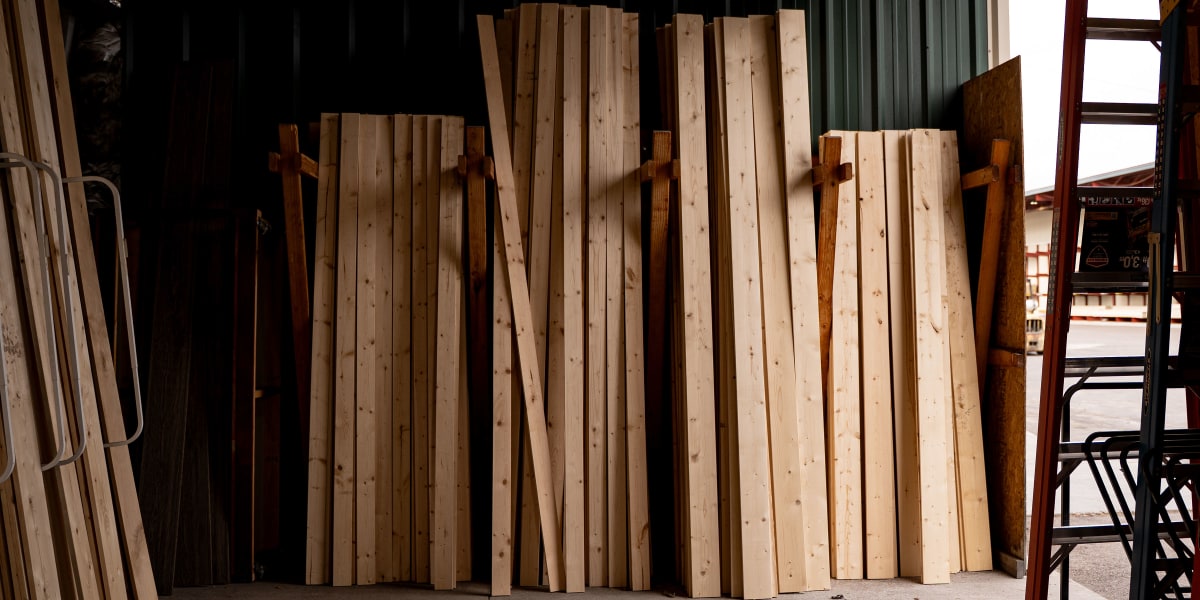
The Craftsman Collection offers authentic, full-thickness wood-look siding with profiles including Channel, V-Rustic, and Board and Batten. These aren’t thin veneers — they’re full-dimension siding that handles like lumber.
Some profiles are reversible for different finishes, giving contractors flexibility without stocking multiple SKUs. The reversible options mean a contemporary V-groove appearance on one side, traditional on the other.
Width options range from 2” to 12”, with 8-foot and 16-foot lengths available. The 16-foot lengths matter for ranch homes — fewer butt joints, cleaner lines, less labor.
It can be installed vertically or horizontally, and here’s the kicker for Montana’s UV exposure: painted in any color—including dark tones. Dark colors on fiber cement cook in summer sun and fail. TruExterior’s thermal stability handles it.
Installation beats every competitor. Products can be cut, milled, glued, stained, and painted on-site. No special blades. No priming or pre-drilling required. Can be mitered for clean lines instead of using corner boards.
Comes pre-primed, requiring painting for final appearance. That’s honest — you’re painting it, but at least the primer’s already done right at the factory.
Real-World Value Analysis
The material investment pays off through longevity and reduced maintenance. Compare repainting cedar every five years or replacing rotted fiber cement at the foundation line after eight. The math works for contractors tired of callbacks.
Low water absorption and minimal movement enable tighter gaps and precise installation. Tighter gaps mean better weather seal and cleaner appearance. Less movement means joints stay tight through Montana’s temperature swings.
Skip TruExterior if you’re comparing it to vinyl on first cost alone. Vinyl costs less upfront. But for builds where longevity matters — anywhere moisture collects, anywhere ground contact happens, anywhere dark colors are specified — the poly-ash technology delivers what it promises.
The 70% recycled content isn’t just green marketing. It’s fly ash that would otherwise go to landfills, turned into siding that outlasts the alternatives. For contractors who’ve torn off failed fiber cement or rotted engineered wood, that’s a technology upgrade worth considering.

Frequently Asked Questions
Q: What makes Woodgrain TruExterior different from fiber cement or engineered wood siding?
TruExterior uses a 70% recycled poly-ash material that contains no wood fiber, preventing the swelling, cracking, and splitting that occurs with traditional composites when exposed to moisture. Unlike fiber cement or engineered wood that deteriorate at ground level, TruExterior is rated for ground and masonry contact, eliminating rot problems at the foundation line.
Q: How long does the paint finish last on TruExterior siding compared to other materials?
TruExterior’s high thermal stability allows it to handle dark paint colors that would cause other sidings to fail from heat exposure in Montana’s intense UV conditions. The siding comes pre-primed from the factory and can be painted any color on-site, with the poly-ash material providing dimensional stability that prevents paint failure from substrate movement.
Q: What profiles and sizes are available in the TruExterior Craftsman Collection?
The Craftsman Collection includes Channel, V-Rustic, and Board and Batten profiles in widths from 2” to 12”, with 8-foot and 16-foot lengths available. Some profiles feature reversible designs, offering a contemporary V-groove appearance on one side and traditional finish on the other, allowing contractors to stock fewer SKUs while providing design flexibility.
Q: Can TruExterior siding be cut and installed with standard tools?
Yes, TruExterior can be cut, milled, glued, stained, and painted on-site using standard tools without special blades. The material requires no pre-drilling and can be mitered for clean corners instead of using corner boards, making installation faster than fiber cement alternatives.
Q: How does TruExterior compare to other siding options for long-term value?
TruExterior offers superior long-term value through its 20-30 year warranty and elimination of common failure points like ground-level rot and moisture damage. While the upfront investment exceeds vinyl siding, the reduced maintenance requirements and extended lifespan provide better return on investment for quality-focused builds.
Q: How does TruExterior handle Montana’s freeze-thaw cycles?
The poly-ash composition provides high dimensional stability regardless of season or climate, with low moisture absorption that prevents the freeze-expansion damage common in wood-fiber composites. TruExterior maintains its shape through temperature extremes, enabling tighter installation gaps that stay sealed through Montana’s 100+ annual freeze-thaw cycles.
Ready to Get Started?
Our siding specialists can help you find the right Woodgrain products for your project.
More from Woodgrain


Explore All Woodgrain Products
We carry Woodgrain across all 11 Montana and Idaho stores.

