
Taylor’s Spokane panels combine Kynar 500® (PVDF) elite high-performance paint with custom lengths up to 45 feet, giving Montana contractors a metal siding system that handles both extreme UV exposure and reduces installation seams on large projects. The 26 gauge panels deliver professional-grade performance without the weight and cost of thicker commercial gauges.

Performance Specifications That Matter
Kynar 500® coating sets these panels apart from standard polyester-coated options. The numbers back up the premium positioning:
| Specification | Value | Source |
|---|---|---|
| Solar Reflectance Index | 25 | Manufacturer |
| Material Thickness | 0.0179” nominal (steel) | Manufacturer |
| Coating System | Kynar 500® (PVDF) | Manufacturer |
| Fire Rating | Class A (ANSI/UL 790, ASTM E108) | Tested |
| Wind Uplift | Class 90 (ANSI/UL 580) | Tested |
| Impact Resistance | UL 2218 | Tested |
The Kynar 500 (PVDF) offers superior color retention and fade resistance compared to ArmorTech™ (SMP) or standard polyester coatings. For Montana’s intense high-altitude UV exposure, this translates to panels that look professional years after cheaper coatings have chalked and faded.
Width Options and Installation Flexibility
Taylor manufactures these panels in four width configurations: 12”, 16”, 32” Single Lap, and 36” Coverage (Tuff Rib). The variety serves different project needs:
- 12” and 16” widths: Work for residential siding where narrower reveals create traditional board-and-batten aesthetics
- 32” Single Lap: Bridges the gap between residential scale and commercial efficiency
- 36” Tuff Rib: Maximum coverage for agricultural buildings and large commercial projects
Custom lengths up to 45 feet eliminate horizontal seams on most residential walls and even many commercial applications. Fewer seams mean fewer potential leak points and faster installation. Standard 10’ or 12’6” lengths remain available for flashing and smaller projects.
The panels feature interlocking panel design for secure and quick installation. Concealed systems (Easy-Lock) offer better weatherproofing and aesthetics, while exposed fastener systems (Tuff Rib) are more cost-effective for large agricultural/industrial projects.

Real-World Performance
The 40-year limited warranty backs up the coating’s durability claims. Weather-resistant properties and extended warranty make it suitable for exterior roofing and siding projects exposed to normal atmospheric conditions.
Reviews show product quality is highly regarded as ‘solid’ and ‘great’, though customer service responsiveness and contractor relations have received mixed feedback. Difficulty for small residential contractors to work directly with factory surfaces as a common complaint. The product itself earns respect; the company’s focus appears tilted toward larger commercial accounts.
Applications span residential roofing (Standing Seam systems like Easy-Lock™, Slim-Lock™), commercial and residential siding (Concealed fastener panels like Board & Batten, SmoothWall™), soffit applications (Lifetime Soffit™), agricultural and industrial siding/roofing (Exposed fastener panels like Tuff Rib, PBR, Marion ‘R’ Panel™), and fascia and flashing (Custom 48” x 120” flat sheets).

Installation Considerations
Recommended installation over rigid continuous substrate (e.g., plywood sheathing) ensures proper support and prevents oil-canning. Thermal movement must be accounted for in long panel runs — critical when installing those 45-foot custom lengths. Montana’s temperature swings demand proper allowance for expansion and contraction.
Only qualified installers familiar with metal roofing standards should perform installation. This isn’t vinyl siding. Metal panels require understanding of thermal movement, proper fastening techniques, and flashing details specific to the profile.

The Montana Verdict
Taylor’s Spokane panels make sense for contractors handling larger projects where the custom lengths up to 45 feet pay dividends in reduced labor and fewer potential leak points. The Kynar 500® coating justifies its premium over standard finishes through genuine UV resistance — critical at Montana elevations where cheaper coatings fail fast.
The 26 gauge is thinner (0.0179”) and more affordable, primarily for residential use, while 24 gauge (0.0209”) is stiffer, thicker, and standard for many commercial UL-rated uplift assemblies. For most residential siding applications, 26 gauge delivers adequate performance without overbuilding.
Not perfect for every job. Small contractors might struggle with direct factory relationships. The premium coating adds cost that budget projects can’t justify. But for quality residential and light commercial work where long-term appearance matters, these panels deliver measurable advantages over commodity alternatives.
FAQs
Q: How does the Charcoal Grey color hold up in Montana sun?
A: The Kynar 500® (PVDF) elite high-performance paint provides superior resistance to color fade and chalking. With a Solar Reflectance Index of 25 and 40-year limited warranty covering color fade, these panels maintain their appearance significantly longer than standard polyester coatings.
Q: What’s the real difference between concealed and exposed fastener systems?
A: Concealed systems (Easy-Lock) offer better weatherproofing and aesthetics, while exposed fastener systems (Tuff Rib) are more cost-effective for large agricultural/industrial projects. Concealed fasteners eliminate potential leak points and create cleaner sight lines for residential applications.
Q: Can these panels handle Montana’s temperature extremes?
A: Yes. Installation guidance specifically notes thermal movement must be accounted for in long panel runs. The interlocking panel design allows for expansion and contraction when properly installed.
Q: What certifications matter for commercial projects?
A: Key certifications include Class A Fire Rating (ANSI/UL 790, ASTM E108), Class 90 Wind Uplift (ANSI/UL 580), Impact Resistance UL 2218, and ICC-ES Evaluation: AC166 (Metal Roof Coverings). These meet or exceed most commercial building requirements.
Ready to Get Started?
Our siding specialists can help you find the right Taylor Metal Products products for your project.
More from Taylor Metal Products


Explore All Taylor Metal Products Products
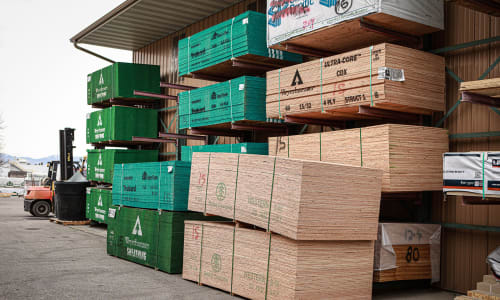
We carry Taylor Metal Products across all 11 Montana and Idaho stores.

