

RISE Trim is a composite trim board made from 94% recycled synthetic fiber — think carpet fibers, insulation remnants, and industrial polyester waste transformed into something useful. At 13’4” length, it’s engineered to span exactly 10 studs at 16” on-center, which means fewer butt joints and less waste on standard framing. The actual thickness is 1.25 inches, giving you real meat for fastening without the weight of double-thick lumber.
For Montana contractors dealing with freeze-thaw cycles that destroy lesser materials, RISE’s resistance to rot, freeze-thaw cycles, heavy rain, and snow makes it worth considering. It’s rated for incidental ground contact, so when snow piles up against your foundation trim all winter, you’re not looking at rot come spring.

Installation That Actually Works
The fastening specs matter more than most contractors realize. Use 8d trim nails or 7d trim screws with minimum 1-1/4 inch penetration into framing. For the 8-inch width boards, you need 3 fasteners across the width — don’t try to cheat with two like you might on narrower stock.
Temperature at installation drives your gap spacing. Below 60°F, leave 3/16” gaps at butt joints. At 60°F or above, tighten that to 1/8”. This isn’t optional — composite materials move differently than wood, and ignoring thermal expansion leads to buckled trim by August.
| Specification | Value |
|---|---|
| Actual Thickness | 1.25 inches |
| Width | 8 inches |
| Length | 13’4” (160 inches) |
| Fastener Spacing | 16” O.C. for studs, 12” O.C. for sheathing |
| Ground Clearance | 4” above landscaping |
| Deck/Roof Clearance | 1/2” minimum |
Material Reality Check
The 94% recycled content includes polyester, nylon, and fiberglass — basically industrial leftovers given a second life. This includes fibers from recycled carpet, vehicle liners, insulation, and wind turbine blades. It’s not trying to be wood. It’s synthetic through and through, which is exactly why it handles Montana weather better than pine trim that starts rotting after five winters.
Compared to fiber cement, RISE is easier to cut and handle, with less breakage, and comes in longer lengths (13’4” vs typical 10-12’). That longer length isn’t just marketing — it’s the difference between a butt joint every 10 feet versus every 13-plus feet. On a 40-foot run, that’s one less joint to caulk and maintain.
The Verdict
RISE Trim makes sense for contractors who understand that upfront material cost is only part of the equation. The freeze-thaw resistance and ground-contact rating solve real problems in Montana’s climate. The 13’4” length reduces labor on long runs. You can work it with standard woodworking tools — no specialty blades or dust masks required like with fiber cement.
Skip it if you’re doing interior work or protected soffits where moisture isn’t a factor. Traditional wood costs less upfront and works fine where it stays dry. But for fascia boards catching roof runoff, foundation trim sitting in snow, or any exterior trim taking weather abuse, RISE earns its keep through durability. The 30-year limited warranty backs up the performance claims, though warranty paperwork doesn’t fix callbacks.

Frequently Asked Questions
Can RISE Trim be painted? Yes, RISE Trim comes in either factory-finished (ColorRISE) or primed versions. The primed version is field-paintable. Choose factory-finished if you want to skip painting entirely.
What about woodpecker damage? The research doesn’t specifically address woodpecker resistance. However, as a synthetic fiber composite, it lacks the insect appeal of natural wood that often attracts woodpeckers searching for carpenter ants.
How does the cost compare to wood trim? No pricing data was provided in the research. Cost comparisons would require current local pricing.
Does it really handle ground contact? Yes, RISE Trim is rated for incidental ground contact with soil or masonry. Ground Contact versions have a protective water barrier that allows occasional soil contact without degradation.
What fasteners work best? The manufacturer specifies 8d trim nails or 7d trim screws, specifically mentioning Simpson Strong-Tie 2 1/4” as an example. Stainless steel fasteners would provide the best long-term performance in Montana’s climate.
Ready to Get Started?
Our siding specialists can help you find the right RISE products for your project.
More from RISE


Explore All RISE Products
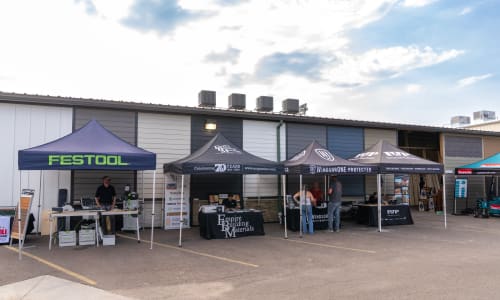
We carry RISE across all 11 Montana and Idaho stores.

