
RISE Trim delivers what matters: 94% recycled content, ground contact rating, and a 13’4” length that matches 10 studs at 16” on-center. The 5/4 x 8 inch boards come in textured wood-grain or smooth finishes, either factory-finished (ColorRISE) or primed.
At 1.25 inches actual thickness, this isn’t your typical composite trim playing dress-up. The ground contact rating means it handles incidental soil or masonry contact — something fiber cement and OSB trim can’t touch without rotting or swelling.

Technical Specs and Installation Reality
The numbers that matter for Montana contractors:
| Specification | Value |
|---|---|
| Actual Dimensions | 1.25” x 8” x 13’4” |
| Material Composition | 94% recycled synthetic fiber and polymer waste |
| Ground Contact Rating | Yes - incidental soil/masonry contact |
| Warranty | 30-Year Limited |
| Fastener Requirements | 8d trim nails or 7d trim screws |
| Fastener Penetration | Minimum 1-1/4 inch into framing |
The recycled content comes from polyester, nylon, and fiberglass — specifically recycled carpets and wind turbine blades. Not the usual wood flour and plastic mix you see in every other composite.
Installation follows standard trim practices with a few specifics. Use 2 fasteners for boards 8 inches or narrower, 3 fasteners for wider boards. Space fasteners 16 inches on-center for studs or 12 inches on-center for nailable sheathing. Temperature matters for joint spacing: leave 3/16-inch gaps if installing below 60°F, 1/8-inch gaps above 60°F.
The 13’4” length optimized for 16-inch on-center stud spacing (matches 10 studs) means fewer butt joints on long runs. That’s real labor savings on ranch homes where you’re running trim the full length of the wall.
Material Performance in Montana Conditions
RISE Trim resists rot, freeze-thaw cycles, heavy rain, and snow without the chemical treatments that leach out of pressure-treated wood. The protective water barrier handles Montana’s 100+ annual freeze-thaw cycles better than fiber cement, which can crack and spall.
The material cuts with standard woodworking tools — your trim saw, miter saw, or circular saw all work fine. No special carbide blades or dust collection required like with fiber cement. It’s described as lightweight for easier handling, which matters when you’re working off ladders or scaffolding.
For ground-level applications where snow piles against the siding, maintain 4 inches clearance above landscaping and 1/2 inch above finished surfaces like decks or roofs. The ground contact rating gives you insurance against the occasional snow drift or mulch pile that homeowners inevitably create.

The Verdict
RISE Trim works for contractors who want longer lengths and ground contact capability. The 94% recycled content satisfies green building requirements without compromising performance. At 13’4”, you’re cutting joints by 25-30% compared to standard 10-foot trim boards.
Skip it if you’re matching existing wood trim on a historic restoration — even the textured finish won’t fool anyone up close. The 30-year warranty suggests confidence in the product, but composite trim is still proving itself in extreme climates.
For new construction and major renovations where you control the trim specs, RISE offers measurable advantages: fewer joints, ground contact rating, and freeze-thaw resistance that matters in Montana. The recycled content from wind turbine blades is either a selling point or irrelevant depending on your customer, but the performance specs stand on their own.

Frequently Asked Questions
Q: Can RISE Trim handle direct ground contact or just incidental contact?
A: The product is rated for incidental ground contact with soil or masonry, not continuous burial. Think splash zones, areas where snow drifts occasionally, or where mulch might pile up temporarily. For continuous ground contact like fence posts, you still need pressure-treated lumber.
Q: How does the 13’4” length actually save money on installation?
A: The length is optimized for 16-inch on-center stud spacing, matching 10 studs exactly. On a 40-foot wall run, you’d use three pieces with one joint instead of four 10-foot pieces with three joints. Fewer joints mean less cutting, less caulking, and less labor time.
Q: What’s the real difference between RISE and fiber cement trim?
A: RISE offers easier cutting and handling, less breakage, and longer lengths (13’4” vs 10-12’). Fiber cement requires special blades, creates silica dust, and breaks if you look at it wrong. RISE works with standard woodworking tools and resists freeze-thaw cycles better than cementitious products.
Q: Does the recycled content affect the product’s performance?
A: The 94% recycled content from polyester, nylon, fiberglass — including recycled carpets and wind turbine blades — actually enhances durability. These synthetic fibers don’t absorb water, won’t rot, and handle temperature swings better than wood fiber composites. The performance comes from the material properties, not despite the recycled content.
Ready to Get Started?
Our siding specialists can help you find the right RISE products for your project.
More from RISE


Explore All RISE Products
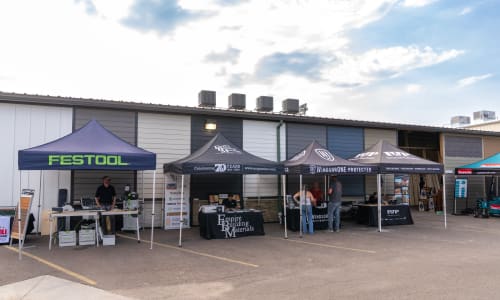
We carry RISE across all 11 Montana and Idaho stores.

