

RISE’s 3/8” × 8.25” × 13’4” (160”) lap siding brings something genuinely different to Montana jobsites. Made from 94% recycled content including polyester, nylon fibers from recycled carpet, vehicle liners, and fiberglass fibers from insulation and wind turbine blades, this isn’t greenwashing — it’s actual waste diversion that performs.
The standout feature? That 13’4” (160”) length. It perfectly matches 16” on-center framing, giving you exactly 10 stud bays per board. No more awkward cuts at the end of runs. Compared to standard 12’ or 16’ lengths, this reduces joints for 16” stud spacing. That’s 25% fewer butt joints than 12-foot boards on the same wall.
The top-and-bottom water barrier allows for incidental ground contact — try that with fiber cement or engineered wood. For Montana’s snowpack situations where siding meets grade, this solves real problems.

Technical Specifications That Matter
| Specification | Value | Source |
|---|---|---|
| Dimensions | 3/8” × 8.25” × 13’4” | manufacturer |
| Length in inches | 160” | manufacturer |
| Material composition | Synthetic fibers (polyester, nylon, fiberglass) with MDI adhesive and phenolic paper facers | manufacturer |
| Recycled content | 94% | manufacturer |
| Wind load rating | Up to 29 psf (transverse wind load per ESR-4731) | tested |
| Flame spread index | ≤ 200 (ASTM E84 Class C) | tested |
| Warranty | 30-Year Limited Warranty (backed by CertainTeed) | manufacturer |
The ICC-ES report ESR-4731 backs up the performance claims. CALGreen 2025 and ICC 700 Green Building Standard certifications mean it counts toward green building requirements without creative interpretation.
Installation Without the Drama
Here’s what actually matters: standard woodworking tools cut it clean. No special blades, no dust masks, no score-and-snap nonsense. Use 1/8” shank × 1/4” head roofing nails with minimum 1” penetration into framing, placed at least 3/4” below the top of siding. Minimum 1” lap between courses.
It’s lighter weight than fiber cement, which means less strain hauling it up scaffolding. The design reduces jobsite waste — that perfect 16” OC match means fewer offcuts in the scrap pile.

Where It Beats Traditional Options
RISE resists moisture, freeze-thaw damage, and rot — critical for Montana’s 100+ annual freeze-thaw cycles. It’s more moisture-resistant than traditional wood or engineered wood. The ground contact capability sets it apart from every other lap siding option. Got a deck ledger situation where siding meets concrete? A foundation step-down? This handles it.
Compared to LP SmartSide and fiber cement sidings, RISE emphasizes sustainability and recycled content. LP brings engineered wood durability but can’t touch 94% recycled content. Fiber cement wins on impact resistance but weighs more and creates silica dust during cutting.

The Reality Check
Limited long-term performance data compared to more traditional materials means you’re betting on lab testing and warranties rather than 30 years of field experience. Some contractors may need to adapt to working with composite fiber-based products — it doesn’t nail or handle exactly like wood.
The ‘new formulation’ that addresses previous industry challenges with synthetic siding suggests earlier versions had issues. What were they? The research doesn’t say.
Montana-Specific Considerations
That 30-year warranty matters more here than in mild climates. Our freeze-thaw cycling destroys lesser sidings in half that time. The ground contact feature becomes genuinely useful when dealing with Montana’s deep snow accumulation against walls.
Common use cases include eco-friendly residential and commercial exteriors where sustainability and durability are priorities. In a state where log homes still dominate the luxury market, a 94% recycled product faces an uphill battle on aesthetics alone. But for contractors focused on performance and green building points, this fills a real gap.
Bottom Line
Worth considering for projects where recycled content matters or where ground contact is unavoidable. The 13’4” length alone saves labor on 16” OC framing. Skip it if you’re locked into traditional aesthetics or need decades of proven field performance.
At 94% recycled content with legitimate third-party certifications, RISE delivers actual sustainability without sacrificing workability. High marks for its wood-like appearance help it compete visually. For the right project — one that values both performance and environmental responsibility — this makes sense.
Frequently Asked Questions
Q: How does the 13’4” length actually save labor?
A: The 13’4” (160”) length perfectly matches 16” on-center framing, giving you exactly 10 stud bays per board. This eliminates the partial-board cuts you get with 12’ or 16’ siding, reducing both cutting time and material waste.
Q: Can RISE siding really touch the ground?
A: The top-and-bottom water barrier allows for incidental ground contact. This doesn’t mean you bury it, but where siding meets grade at foundations or deck ledgers, it won’t fail like wood or fiber cement products.
Q: What tools do I need for installation?
A: Standard woodworking tools (no special tools required). Your regular circular saw with a fine-tooth blade cuts it clean. Use 1/8” shank × 1/4” head roofing nails with minimum 1” penetration into framing.
Q: How does 94% recycled content compare to other sidings?
A: RISE contains 94% recycled content from polyester, nylon fibers from recycled carpet, vehicle liners, and fiberglass from insulation and wind turbine blades. Most fiber cement contains 0-10% recycled content. Engineered wood sidings typically contain 0% recycled content.
Q: What’s the real weight difference versus fiber cement?
A: RISE is lighter weight than fiber cement, making it easier to handle during installation, especially on scaffolding or ladder work. The research doesn’t provide specific pound-per-square measurements.
Ready to Get Started?
Our siding specialists can help you find the right RISE products for your project.
More from RISE


Explore All RISE Products
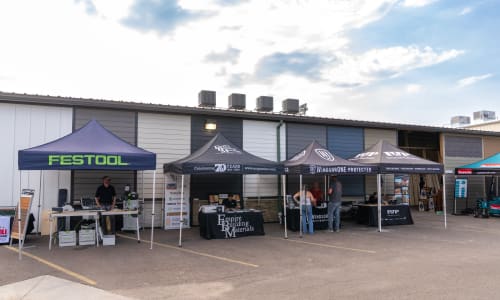
We carry RISE across all 11 Montana and Idaho stores.

