
Allura Spectrum solves the two biggest shake siding headaches — on-site painting delays and long-term maintenance. These fiber cement panels arrive with a machine-applied, oven-cured Sherwin-Williams 100% acrylic coating on all five sides, in 25 curated colors with inter-ground natural pigments. Built-in resistance to UV exposure, termites, and freeze-thaw cycles makes this a serious contender for Montana’s demanding climate.
The verdict? Worth it for contractors who want shake aesthetics without the callbacks. The factory finish eliminates weather-dependent painting schedules — critical when Montana’s building season runs short. The 30-year substrate warranty backs the fiber cement, while the 15-year paint warranty (with optional 30-year coverage in some regions) covers the finish.

Factory Finish Changes the Game
The Spectrum coating system uses machine-applied, oven-cured Sherwin-Williams KEM AQUA BP Pro 100% acrylic — not the brush-and-roller job that happens in the rain. Five-sided coverage means uniform paint thickness on all surfaces, including those critical bottom edges where moisture likes to attack.
Contractors report 15-20% faster installation compared to prime-and-paint alternatives, though that’s comparing to a competitor’s product line. The real time savings come from eliminating return trips for painting. No waiting for dry weather. No masking windows. No overspray on the landscaping.
The 25 Sherwin-Williams colors use inter-ground natural pigments for color fastness. Standard finish warranty runs 15 years, with some regions offering 30-year paint warranties. Coverage includes peeling, chipping, and cracking under normal conditions.
Installation Specifications Matter
Each 48” x 16” panel weighs 13.125 pounds and covers 2 square feet. Exposure runs 6 to 7 inches depending on edge style — contractors need to specify which profile they’re calculating for.
| Specification | Value |
|---|---|
| Panel dimensions | 48” W x 16” H |
| Alternative height | 12” |
| Weight per panel | 13.125 lbs |
| Coverage | 2 sq ft per panel |
| Exposure | 6” to 7” |
| Thickness | 1/4” |
The weight demands proper crew planning — heavier than vinyl or wood means more labor for installation. Cutting requires specialized tools like fiber cement shears or dust-collecting saws — standard wood saws create silica dust that nobody wants to breathe.
Installation calls for corrosion-resistant siding nails, specifically 2-3/16” ring-shank — not the galvanized smooth-shank nails sitting in the truck. Every cut end and exposed edge needs resealing with color-matched touch-up paint. Skip this step and the warranty walks.
Panels need acclimation to job-site conditions before installation. Proper clearance from grade, rooflines, and horizontal surfaces follows Allura’s installation manual requirements. Approved sealants include Bostik DUO-SIL Ultra and OSI QUAD MAX — not whatever caulk is on sale.

Weather Performance for Montana
The Class A fire rating (ASTM E84) matters in Montana’s wildfire zones. Freeze-thaw resistance is built into the fiber cement substrate — critical when mountain valleys see 100+ freeze-thaw cycles annually.
Moisture resistance prevents the cracking, splitting, and swelling that destroys wood shakes after a decade of Montana weather. Compared to real cedar, Allura offers better fire resistance (Class A versus Class C/B) and immunity to rot and wood-boring insects.
The material holds up where it counts. The brittle nature of fiber cement makes it prone to cracking if mishandled during installation — but once it’s on the wall, it stays put. Termite resistance might not seem relevant in Montana, but carpenter ants are the real wood destroyers here, and fiber cement gives them nothing to eat.

The Bottom Line
Contractors regard it highly for cost-to-quality ratio, while homeowners appreciate the authentic wood look and ‘install-and-forget’ convenience. The product delivers on its core promise — shake aesthetics without the maintenance headaches.
Often noted as a more cost-effective alternative to James Hardie with comparable durability and wider custom color options. Against engineered wood like LP SmartSide, fiber cement’s non-combustible nature and superior moisture resistance make the difference.
For Montana contractors dealing with short building seasons, extreme weather swings, and increasing wildfire concerns, Allura Spectrum makes sense. The factory finish alone justifies consideration — no more explaining to clients why their siding can’t be painted until next spring.

Frequently Asked Questions
Q: How does the weight of Allura Spectrum panels affect installation time and labor costs?
At 13.125 pounds per panel, these shake panels demand proper crew planning. The heavier weight compared to vinyl or wood requires more labor for installation. Figure on slower square footage per day than vinyl, but faster than prime-and-paint fiber cement since the factory finish eliminates on-site painting.
Q: What specific tools are required for cutting Allura fiber cement panels?
Specialized tools include fiber cement shears or dust-collecting saws. Standard wood saws create silica dust clouds that violate OSHA regulations and nobody wants to breathe. The right tools are mandatory, not optional.
Q: How do I maintain the warranty on Allura Spectrum panels?
All cut ends and exposed edges must be resealed with color-matched touch-up paint. Maintain proper clearance from grade, rooflines, and horizontal surfaces per Allura’s installation manual. Use only approved sealants like Bostik DUO-SIL Ultra or OSI QUAD MAX. Skip any of these steps and the warranty coverage disappears.
Q: What accessories and trim options work with the Spectrum color system?
Allura offers Spectrum trim, soffit, and fascia for complete color-matched exteriors. Touch-up kits come in 4 oz or 1 quart sizes for field repairs. Color-matched fasteners, flashing, house wrap, and caulking sell separately.
Q: How does Allura Spectrum compare to LP SmartSide for Montana applications?
Fiber cement is non-combustible and generally more resistant to moisture-related decay than wood-based substrates. In Montana’s wildfire zones and moisture-prone valleys, that non-combustible Class A fire rating provides real protection that engineered wood can’t match. The moisture resistance prevents cracking, splitting, and swelling through decades of freeze-thaw cycles.
Ready to Get Started?
Our siding specialists can help you find the right Allura products for your project.
More from Allura


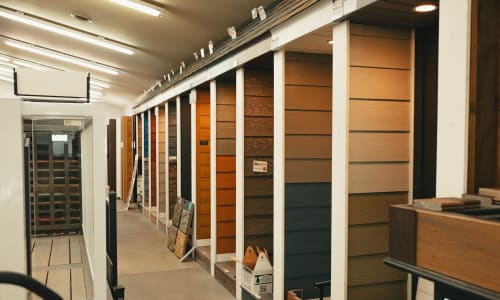
Explore All Allura Products
We carry Allura across all 11 Montana and Idaho stores.