Allura’s vented soffit panel delivers superior net free air space (6.9 sq. in./lineal foot) with Class A fire rating (ASTM E84) and non-combustible certification — critical specs for Montana’s wildfire zones and building codes. The 1/4” x 16” x 12’ fiber cement panels solve the ventilation-versus-fire-resistance dilemma that plagues other soffit materials.
This isn’t vinyl that’ll melt in a wildfire or aluminum that dents from hail. CAL-FIRE WUI Listed Product (Listing 8170-2180:0502) means insurance companies and building officials recognize its performance in fire-prone areas. For contractors working Montana’s expanding wildland-urban interface, that certification matters.

Fire Performance & Ventilation Specs
The numbers tell the story. Flame Spread Index: 0, Smoke Developed Index: ≤ 5 puts this material in the same fire-resistance category as concrete block. ASTM E136 and CAN/ULC S114 non-combustible ratings mean it won’t contribute fuel to a structure fire.
| Specification | Value |
|---|---|
| Net Free Air Space | 6.9 sq. in. per lineal foot |
| Total Ventilation (12-ft board) | 82.8 sq. in. |
| Fire Rating | Class A (ASTM E84) |
| Flame Spread Index | 0 |
| Smoke Developed Index | ≤ 5 |
| Panel Dimensions | 1/4” x 16” x 12’ |
Ventilation calculations become straightforward. 6.9 square inches per lineal foot means a 20-foot soffit run provides 138 square inches of net free area. That’s real airflow data, not marketing fluff. Compare that to solid soffits with aftermarket vents — inconsistent spacing, reduced structural integrity, more labor.
Weather & Installation Requirements
FEMA Class 5 flood-damage-resistant rating addresses Montana’s spring melt concerns. The material does not rot, swell, or split when exposed to moisture cycles. Engineered for high-wind areas, it handles the chinook winds that rip through Great Falls and the downslope gusts off the Mission Mountains.
Resistance to termites and wood-boring insects eliminates a maintenance headache. No carpenter ants hollowing out the soffits. No woodpeckers punching holes looking for bugs. The material simply doesn’t support insect life.
Installation demands attention to expansion. Minimum 1/8” expansion gap required between panels and at joints — critical for Montana’s temperature swings. Corrosion-resistant fasteners 1-1/4” to 1-3/4” length, spaced ≤ 16” on center ensure proper attachment without rust streaks. Use Allura-approved caulks (Bostik DUO-SIL Ultra, OSI QUAD MAX) for sealing — not all sealants bond properly to fiber cement.
Panels come factory-primed or with Allura Spectrum factory finish. The primed version takes paint well, while the 15-year transferable limited finish warranty on Spectrum colors provides long-term protection. 30-year transferable, non-prorated limited warranty backs the substrate itself.
Compared to vinyl, fiber cement is significantly more fire-resistant (Class A vs combustible) and does not melt or warp in extreme heat. Less prone to denting than aluminum and doesn’t corrode. The trade-off? Weight and cutting requirements. Use a circular saw or panel saw with carbide-tipped blade — standard wood blades won’t last. Recommend 2 people for loading/handling because a 12-foot panel has heft.
For Montana contractors dealing with wildfire regulations, ice dam prevention needs, and 100+ freeze-thaw cycles per year, these panels deliver measurable performance advantages. The ventilation spec meets code requirements while the fire rating exceeds them. Not the cheapest soffit option. But for projects where fire resistance, proper ventilation, and long-term durability matter, the numbers justify the investment.


Frequently Asked Questions
Q: What’s the actual ventilation capacity of Allura’s 16” vented soffit panels?
Allura’s vented fiber cement soffit panels provide 6.9 square inches of net free air space per lineal foot, or approximately 82.8 square inches per 12-foot board. This ventilation spec allows proper attic airflow while maintaining the panel’s structural integrity and fire resistance.
Q: How does Allura fiber cement soffit handle Montana’s wildfire risk compared to vinyl?
Allura soffit panels carry a Class A fire rating (ASTM E84) with Flame Spread Index of 0 and Smoke Developed Index ≤ 5, making them non-combustible. Vinyl soffits are combustible and will melt in extreme heat, while Allura’s fiber cement maintains its integrity and won’t contribute fuel to a structure fire.
Q: What fasteners and spacing does Allura require for their soffit installation?
Allura requires corrosion-resistant nails or screws between 1-1/4” to 1-3/4” length, spaced no more than 16” on center. The panels also need a minimum 1/8” expansion gap between panels and at joints to accommodate temperature-related expansion and contraction.
Q: Does Allura soffit come pre-finished or just primed?
Allura soffit panels are available in two finish options: factory-primed (ready for field painting) or Allura Spectrum factory-finished colors. The Spectrum finish comes with a 15-year transferable limited warranty, while the substrate itself carries a 30-year transferable, non-prorated limited warranty.
Q: What certifications does Allura fiber cement soffit have for building codes?
Allura soffit panels meet ASTM C1186 (Type A, Grade II), ASTM E136 and CAN/ULC S114 for non-combustibility, CAL-FIRE WUI Listed Product (Listing 8170-2180:0502), and carry approvals for 2024 IBC/IRC codes. The panels also have FEMA Class 5 flood-damage-resistant rating.
Q: Can I cut Allura fiber cement soffit with regular wood saw blades?
No, Allura recommends using a circular saw or panel saw with a carbide-tipped blade for cutting their fiber cement panels. Standard wood blades won’t provide clean cuts or sufficient blade life when cutting fiber cement material.
Ready to Get Started?
Our siding specialists can help you find the right Allura products for your project.
More from Allura


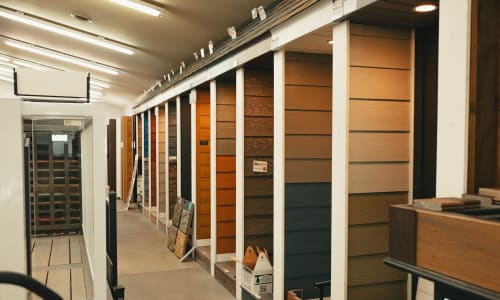
Explore All Allura Products
We carry Allura across all 11 Montana and Idaho stores.