Allura Shake delivers faster installation than individual shingles with its multishake panel design at 16″x48″, while maintaining the Class A fire rating Montana contractors need for wildfire-prone regions. The 10.0 lb panels hit the sweet spot between manageable weight and structural substance — light enough for efficient handling, heavy enough to stay put in chinook winds.

Installation Efficiency and Weather Performance
The math works out cleanly for contractors. 43 panels cover a square (100 sq. ft.), and each panel creates multiple shake rows with a single placement. That’s the efficiency gain over nailing individual shingles. The 7-inch exposure maintains traditional proportions while the panel format cuts installation time.
Fiber cement (blend of wood pulp and Portland cement) construction means these panels won’t rot, crack, or feed the woodpeckers that plague Montana cedar installations. The material achieves dimensional stability that prevents cracking, splitting, and swelling — critical for surviving 100+ freeze-thaw cycles annually.
Key Specifications
| Specification | Value |
|---|---|
| Panel Dimensions | 16 inches x 48 inches (406mm x 1219mm) |
| Weight per Panel | Approximately 10.0 lbs (4.5 kg) |
| Coverage | Approximately 43 panels per square (100 sq. ft.) |
| Thickness | 1/4 inch (actual 0.25 inch; nominal 5/16 inch) |
| Exposure | 7 inches |
| Fire Rating | Class A (highest fire resistance rating) |
| Wind Resistance | Tested to withstand hurricane-force winds (ICC-ES certified) |
The hurricane-force wind resistance certification translates directly to Montana’s chinook wind events. While not technically hurricanes, chinook gusts hit similar velocities and create the same uplift forces on siding.
Fire Safety and Building Code Compliance
Class A fire rating isn’t just a spec sheet bullet point in Montana. It’s becoming mandatory in WUI zones and increasingly expected by insurance companies even outside designated fire zones. Allura backs this with serious certifications: CalFire WUI (Wildland Urban Interface) Listing 8140-2180, ICC-ES ESR-1668 (Building code compliance evaluation), and ASTM E84 (Surface Burning Characteristics - Class A rating).
The noncombustible nature and flood damage resistance addresses both ends of Montana’s disaster spectrum — summer wildfires and spring flooding. Flame spread index 0 and smoke developed index ≤5 per ASTM E84 puts this material in the top tier for fire performance.

Installation Requirements and Material Handling
Fiber cement shears or saw with carbide-tipped/polycrystalline diamond blade are mandatory — standard wood blades won’t cut it. The pneumatic siding nailer or standard hammer flexibility means crews can work with existing tools. Stainless steel or hot-dipped galvanized siding nails (minimum 1-1/4 inch length) prevent rust streaking.
Critical installation details: Install panels from bottom to top; maintain a 1/8 inch gap at trim locations for sealant; use 1-1/4 inch thick trim when butting to lap siding for a flush look. That 1/8 inch gap matters — fiber cement doesn’t compress like wood, so tight joints will buckle.
Primed panels must be painted within 180 days with a high-quality exterior-grade 100% acrylic latex paint. That 180-day window works with Montana’s construction season — install through summer and fall, paint before winter sets in.

Warranty Coverage
30-year limited product warranty covers product defects with specific conditions. Does not cover improper installation or failure to paint within the 180-day window for primed products. Regular inspection of caulking and cleaning with low-pressure water is recommended to maintain warranty validity.
The warranty structure reflects fiber cement realities — the material itself is bombproof, but installation details and maintenance matter. Some concerns raised in legal contexts, as a class action lawsuit alleged that Allura fiber cement siding can crack, break, and shrink over time. While the manufacturer has not admitted to durability issues, they have settled the lawsuit.

The Bottom Line
Allura Shake panels solve real problems for Montana contractors. The panel format cuts labor time versus individual shingles. Class A fire rating and hurricane-wind certification handle Montana’s environmental extremes. The 10-pound weight allows single-person handling without the flimsy feel of lighter alternatives.
Some installers note the weight of the panels as a challenge compared to vinyl or engineered wood. Fair point — but that weight comes from actual cement content that delivers fire resistance and dimensional stability. For contractors building in Montana’s WUI zones or dealing with insurance requirements for fire-resistant materials, these panels deliver what’s needed.
The 180-day paint window accommodates real construction schedules. The warranty backs the product for three decades. And unlike cedar shakes, these won’t become a woodpecker buffet or rot from the inside out after a decade of freeze-thaw cycles.
Frequently Asked Questions
Q: How do Allura Shake panels compare to individual fiber cement shingles for installation time?
A: Multishake panel design allows for faster and more uniform installation than individual shingles. Each 16″x48″ panel covers the area of multiple individual shakes with one placement. Coverage works out to approximately 43 panels per square, significantly reducing the number of fastening points versus individual 5-7 inch shingles.
Q: What specific fire testing standards does this product meet?
A: The panels meet multiple fire standards: ASTM E84 (Surface Burning Characteristics - Class A rating), evaluated as non-combustible per ASTM E136 and CAN/ULC S114, and carry CalFire WUI (Wildland Urban Interface) Listing 8140-2180. Flame spread index 0 and smoke developed index ≤5 represent the highest level of fire performance.
Q: Can these panels handle Montana’s temperature extremes without cracking?
A: Dimensional stability prevents cracking, splitting, and swelling through temperature cycling. However, a class action lawsuit alleged that Allura fiber cement siding can crack, break, and shrink over time, though the manufacturer settled without admitting defects. Proper installation to ensure longevity is critical — following gap requirements and using proper fasteners prevents stress-related failures.
Q: What happens if the primed panels aren’t painted within 180 days?
A: Warranty does not cover failure to paint within the 180-day window for primed products. Beyond warranty concerns, unpainted fiber cement primer isn’t designed for long-term weather exposure. The primer provides temporary protection during construction but requires topcoating with high-quality exterior-grade 100% acrylic latex paint for proper moisture resistance.
Q: How much do these panels actually weigh compared to other siding options?
A: Each panel weighs approximately 10.0 lbs (4.5 kg). Some installers note the weight of the panels as a challenge compared to vinyl or engineered wood. For context, a comparable coverage of vinyl shake panels would weigh 3-4 pounds, while cedar shingles for the same area would weigh 15-20 pounds. The weight reflects the cement content that provides fire resistance and durability.
Ready to Get Started?
Our siding specialists can help you find the right Allura products for your project.
More from Allura


Explore All Allura Products
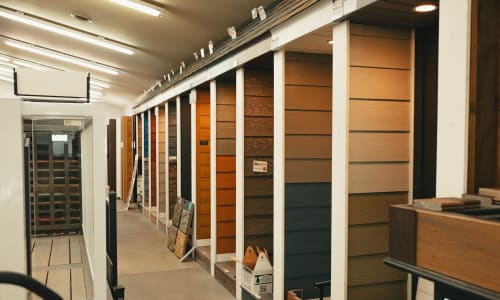
We carry Allura across all 11 Montana and Idaho stores.