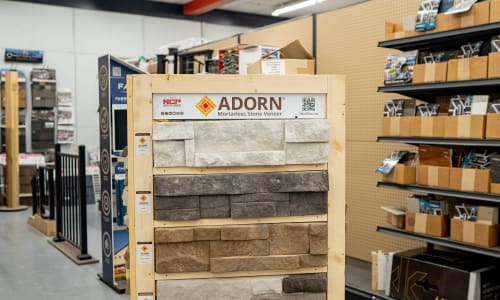
Allura’s 5/16” fiber cement panels with 8” on-center grooves deliver the cedar texture contractors want with the fire resistance Montana’s wildfire zones demand. At 20-30% less cost than James Hardie with the same 30-year warranty, these panels make sense for builders who need proven performance without the premium price tag.
The 88.4-pound panels combine Portland cement, wood pulp, sand, and water into sheets that won’t burn, won’t rot, and won’t feed termites. With Class A fire rating (non-combustible) and FEMA Class 5 flood-damage resistance, they handle Montana’s extremes better than engineered wood alternatives.
Fire and Weather Resistance Specifications
These panels earn their Class A fire rating through genuine non-combustibility testing (ASTM E136), with a Flame Spread Index of 0 and Smoke Developed Index of 5 or less. The CalFire WUI Listing (8170-2180:0501) proves they meet California’s strictest wildfire interface requirements — standards that matter increasingly in Montana’s expanding WUI zones.
FEMA Class 5 flood-damage resistance means these panels survive the kind of water exposure that destroys wood siding. The engineered fiber-cement composition resists cracking, splitting, swelling, and delamination through Montana’s freeze-thaw cycles.
| Certification | Value | Application |
|---|---|---|
| Fire Rating | Class A (Non-combustible) | Meets Montana IWUIC requirements |
| Flame Spread Index | 0 | Won’t contribute to fire spread |
| Smoke Developed Index | ≤ 5 | Minimal smoke generation |
| FEMA Rating | Class 5 flood-damage resistant | Survives flooding events |
| CalFire WUI | 8170-2180:0501 | Approved for wildfire zones |
While LP SmartSide cuts easier with standard wood tools, it can’t match fiber cement’s Class A fire rating — a critical difference when building near Montana’s forests.
Installation Requirements and Clearances
Proper installation starts with maintaining 6 inches clearance from grade — essential when Montana’s snow builds against foundations. Keep panels 1-2 inches away from rooflines, decks, and horizontal surfaces where snow accumulates.
The expansion gap requirements reflect fiber cement’s minimal but real movement: leave 1/8 to 1/4 inch at all butt joints and where siding meets trim. Fasten with corrosion-resistant siding nails (6d or 8d galvanized ring-shank) at 6 inches on-center along panel edges and 12 inches on-center at intermediate studs.
| Installation Spec | Requirement | Why It Matters |
|---|---|---|
| Grade clearance | 6 inches minimum | Prevents moisture wicking |
| Horizontal surface clearance | 1-2 inches | Snow accumulation space |
| Expansion gaps | 1/8 to 1/4 inch | Allows thermal movement |
| Edge fastening | 6 inches OC | Secures panel perimeter |
| Field fastening | 12 inches OC | Prevents buckling |
Seal joints with high-quality, paintable, permanently flexible sealant like OSI Quad, or install flashing behind joints. Panels install over wood or steel studs at 16 or 24 inches on-center with appropriate house wrap.
Weight and Handling Specifications
Each 4’ x 9’ panel weighs 88.4 pounds — that’s 2.45 pounds per square foot. Two-person handling makes sense for safety and preventing edge damage during installation. The 10-foot panels run 98.25 pounds, pushing the limits of single-person maneuvering.
Cut these panels with fiber cement shears (like Snapper Shears), fiber cement circular saw blades, or score-and-snap tools. Standard wood blades burn through teeth and create excessive dust. The right tools matter when you’re cutting dozens of panels.
| Panel Size | Weight | Coverage |
|---|---|---|
| 4’ x 9’ | 88.4 lbs | 36 sq ft |
| 4’ x 10’ (calculated) | 98.25 lbs | 40 sq ft |
| Weight per sq ft | 2.45 lbs | - |
The panels feature high impact resistance and dimensional stability — they won’t warp or buckle like engineered wood can in Montana’s temperature swings.

Cost-Performance Analysis
Allura panels run 20-30% less expensive than James Hardie while delivering identical core benefits. Both brands offer 30-year transferable limited warranties on substrate integrity. The finish warranty covers 15 years for factory-applied Allura Spectrum coating, protecting against peeling, chipping, and cracking.
Compared to LP SmartSide, Allura costs more upfront but saves on long-term fire insurance in WUI zones and eliminates concerns about moisture damage. Vinyl siding costs less initially but can’t match fiber cement’s impact resistance or fire rating — critical factors for Montana builders.
A builder named Jamie Spence notes that from a “longevity standpoint it has to be the best product out there.” Panels come factory-primed or pre-finished with Sherwin-Williams coating through Allura’s Spectrum system. Primed panels accept any 100% acrylic latex exterior paint.
Warranty exclusions include damage from improper installation, lack of maintenance, or structural movement — standard limitations that emphasize proper installation matters as much as material quality.

Frequently Asked Questions
What makes these panels suitable for Montana’s wildfire zones?
The Class A fire rating (non-combustible per ASTM E136) and CalFire WUI Listing (8170-2180:0501) mean these panels meet the strictest wildfire interface requirements. With a Flame Spread Index of 0 and Smoke Developed Index of 5 or less, they won’t contribute to fire spread.
How do 8” OC grooves affect installation?
The 8-inch on-center groove pattern creates vertical shadow lines every 8 inches across the 48-inch panel width. Grooves align automatically when panels butt together, creating a consistent board-and-batten appearance without individual battens.
Can these panels handle Montana’s freeze-thaw cycles?
The fiber-cement composition (Portland cement, wood pulp, sand, and water) resists cracking, splitting, swelling, and delamination through repeated freeze-thaw cycles. FEMA Class 5 flood-damage resistance proves they survive extreme moisture exposure.
What’s the real weight difference versus other sidings?
At 2.45 pounds per square foot, these panels weigh roughly three times more than engineered wood siding. A 4’ x 9’ panel at 88.4 pounds requires two-person handling for safe installation. Factor additional labor time versus lighter materials.
Do pre-finished panels really last 15 years in Montana weather?
Allura backs their Spectrum finish (factory-applied Sherwin-Williams coating) with a 15-year transferable warranty against peeling, chipping, and cracking. Primed panels let you choose any 100% acrylic latex exterior paint, but field-applied finishes won’t match factory coating durability.
Ready to Get Started?
Our siding specialists can help you find the right Allura products for your project.
More from Allura


Explore All Allura Products
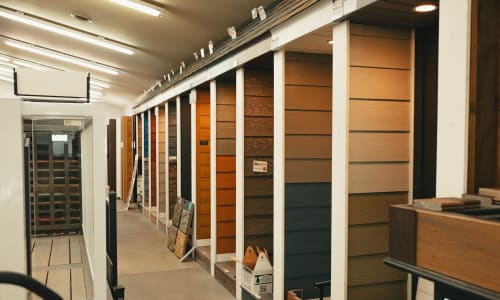
We carry Allura across all 11 Montana and Idaho stores.