Allura Panel Siding’s 5/16” x 4’ x 12’ format delivers 48 square feet of coverage per panel — that’s 50% more than standard 4’ x 8’ sheets. At approximately 110 pounds per panel, these require 2-3 people to handle, but the larger coverage pays off in reduced installation time on commercial projects, agricultural buildings, and anywhere you’re covering serious square footage fast.
The panels use standard fiber cement composition — Portland cement, sand, and cellulose fibers — at 5/16” thickness. That thickness balances structural integrity with reasonable handling weight. Allura rates these at approximately 2.3 pounds per square foot, which puts them right in the sweet spot for commercial-grade siding that won’t buckle or warp.

Fire Performance That Actually Matters
These panels carry a Class A fire rating with 0 flame spread and 0 smoke spread per ASTM E84. They’re classified as non-combustible per ASTM E136. In Montana’s wildfire interface zones, that’s not marketing fluff — it’s the difference between approved and rejected on commercial projects.
The CalFire WUI Listing (8170-2180:0501), Texas Department of Insurance Report (EC-16), and Florida Building Code Approval (FL20742-R6) prove these panels meet fire standards coast to coast.
| Fire Safety Specifications | Rating |
|---|---|
| Fire Rating | Class A |
| Flame Spread (ASTM E84) | 0 |
| Smoke Spread (ASTM E84) | 0 |
| Combustibility | Non-combustible per ASTM E136 |
Installation Requirements and Reality
Installation demands proper fastening: galvanized siding nails or screws with 1-1/4 inch penetration into framing, spaced 6 inches on center along edges and 12 inches on center in the field. Those aren’t suggestions — skimp on fastening patterns and these heavy panels will show it.
Critical clearances include 6 inches from ground grade, 2 inches from rooflines or decks, and 1/8 to 1/4 inch gaps for caulk at trim. That 6-inch ground clearance prevents moisture wicking and keeps the warranty valid.
The main installation complaints center on weight and silica dust. Panels can be brittle if mishandled, and at 110 pounds each, mishandling happens when crews try to solo what’s clearly a two-person job. Cutting generates dangerous silica dust if done dry without protection — wet-cutting or proper dust collection isn’t optional, it’s mandatory for crew safety.
Storage matters too: store flat, level, and dry, with no more than 2 pallets stacked high. These aren’t vinyl panels you can lean against a wall for weeks.

The Bottom Line
Contractors regard Allura as a competitive and reliable option in the fiber cement siding market, with strengths in durability, appearance, and warranty support. The 30-year limited transferable warranty covers product defects, rot, hail damage, and fire resistance — comprehensive coverage that backs up the performance claims.
The 4’ x 12’ format makes sense for commercial walls, agricultural buildings, and any project where coverage speed matters. Compared to real wood cedar, these panels offer superior fire resistance with no rot and lower maintenance. Against other fiber cement options like James Hardie’s HardiePanel, Allura offers comparable performance with a 30-year transferable warranty and deep texture. Versus LP SmartSide, Allura brings non-combustible fiber cement construction where LP uses combustible engineered wood.
For Montana contractors dealing with wildfire interface requirements and commercial fire codes, these panels solve real problems. The weight and dust concerns during installation are legitimate, but proper crew sizing and safety protocols handle both. When you need to cover large walls fast with fire-rated material that’ll last decades, the math on these panels works.

Frequently Asked Questions
What size crew do I need to install Allura 4’ x 12’ panels?
At approximately 110 pounds per panel, you need 2-3 people for safe handling of the 12-foot panels. Don’t try to muscle these solo — the weight combined with the panel size makes single-person installation both dangerous and likely to damage the product.
How does Allura’s Traditional Cedar texture compare to real cedar?
The Traditional Cedar texture uses realistic wood grain printing to create an authentic cedar appearance. Professional reviews consistently highlight Allura’s superior wood-look products that offer highly authentic appearance comparable to natural cedar, making them suitable where aesthetics matter alongside durability.
What safety equipment is required for cutting Allura panels?
Cutting generates dangerous silica dust if done dry without protection. Always use wet-cutting methods or proper dust collection systems with HEPA filtration. N95 respirators are the absolute minimum — P100 filters are better. This isn’t optional — silica dust causes permanent lung damage.
Can these panels be used for interior applications?
The panels are designed for vertical siding on residential and light commercial exteriors, large wall coverage including sheds and barns, exterior wall accents, and overhead soffit panels. The product specs focus entirely on exterior use — for interior applications, consult Allura directly about suitability and code compliance.
Ready to Get Started?
Our siding specialists can help you find the right Allura products for your project.
More from Allura


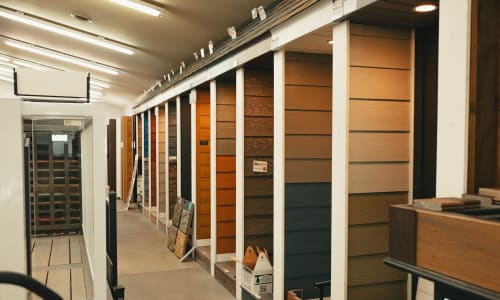
Explore All Allura Products
We carry Allura across all 11 Montana and Idaho stores.